The No. 1 Question Everybody Working In Cabin Bed Ladder Should Be Able To Answer
Cabin Bed Ladder This bed ladder for cabins is constructed of solid Southern Yellow Pine. Similar to telephone poles, this material is extremely durable and robust. One end of the bed ladder is attached to the frame, and you hold the other, the “ladder” end, with the rungs. You can place the ladder at either the foot or side of your mattress. Safety Features 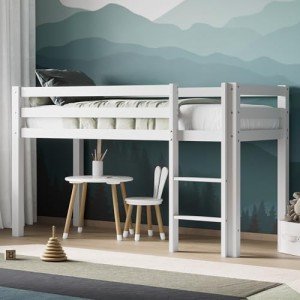 A cabin bed ladder should be durable and sturdy to ensure safety. Bunk Beds Store should be securely fixed to the bed without gaps, or looseness which could cause children to climb from their beds or fall off the ladder. Many manufacturers provide professional installation services to ensure the safety and security of your loft bed or bunk bed. It is important to carefully review all instructions and safety precautions before attempting DIY. The ladder must also be angled correctly. A slight incline on ladders help younger children to reach the top bunk, and are safer to climb than traditional ladders. This type of ladder takes up some space than a standard bunk bed ladder, but it is worth the extra space to reduce the chance of accidents. To avoid injury, the ladder should also have smooth surfaces and edge rounded. Rounded corners also eliminate sharp points that could snag or get caught in clothing. Sanding the ladder and steps frames will remove any rough materials and remove the risk of splinters. Some models include storage drawers built into the steps, which adds functionality without harming safety. A loft bed or bunk bed ladder should have safety rails that extend at least 5 inches above the mattress's surface, to protect sleepers from accidental falls in the course of play or sleep. Some models come with removable railings for flexibility and adaptability. Other models are fixed to ensure stability over time. A retractable Ladder Gate can stop your children from climbing to the top level of the ladder at the night when they are sleepwalkers or dreamers. If you have children who share a room, a Ladder Protection can stop curious children from climbing to the top level and getting hurt. Before purchasing a bed that has a ladder, you should measure the dimensions of the bedroom of your child to ensure that there is enough space to accommodate the bed as well as any other features that could be connected to it. Check the ceiling height as well, especially in the case of a high-sleeper option on your list. A bunk bed or loft that is too close the ceiling can limit airflow and cause discomfort. It can also pose danger of fire and block the windows, which can result in injuries caused by broken glass or falling objects. Length For safety reasons, you want to ensure that the ladder is of the right length for your room. You don't want it to be too far above the ground or too close. For children, it's best to keep the rungs about 10 inches apart, and for adults 12 inches apart. The ends of the rungs should also be round. The edges of squares can cause sharp edges or splinters to the feel. This is especially important if you are building your own bunk bed ladder because it's something you can easily ignore. Another thing to think about is the location you would like the ladder to attach to the frame of the bed. The ladder can be attached to the side or foot of the mattress. Both positions offer advantages and disadvantages. It is up to you to choose which is most suitable for your bedroom. Design A cabin bed ladder is attached to the frame at one end, unlike traditional ladders that are attached either to the frame or on the mattress's foot. The other end, which has the rungs are held by the user. This design lets the user be more independent in the bed. This is especially beneficial for those who are recovering from abdominal surgery or who have limited mobility. The fact that a cabin bed ladder is attached only at one end also makes it easy to put up and use. This is particularly crucial in bunk beds for campers, as space can be a problem.